Picture a brand new sofa stuck in a Seattle stairwell. I watched that happen to a friend, and it was not funny at the time. A pretty sofa means little if it will not fit. That is why knowing how to choose furniture for a new home matters so much. In this guide, I share the steps I use. We will measure, set a budget, check materials, and pick pieces room by room. You will also meet a few simple tools that make the job easy.
Understand Your Home and Furniture Needs Before Shopping
The best choices start with your home, not the store. Spend one evening on this step. It can save you weeks of regret. Use the new home furniture checklist as a base for your notes.
Think About Your Daily Lifestyle
Start with the people. How many live in the home? Do kids run through the living room? Does a dog nap on every cushion? Do guests stay over often?
Each answer changes what you should buy. A family with toddlers needs rounded corners and fabric that wipes clean. A couple who host dinner needs a bigger table. Someone who works from home needs a real desk and a good chair.
Write these needs down. Think about storage too. Where will coats, shoes, and spare linens go? I always ask people how they spend a normal Tuesday evening. That one question tells me more than any style quiz.
Identify the Purpose of Each Room
Every room has a job. Name that job before you shop. It keeps you from buying pieces that look nice but do nothing.
- Living room: rest, guests, and family time.
- Bedroom: sleep, comfort, and personal storage.
- Dining room: daily meals and group dinners.
- Home office: focus and a comfortable seat.
- Entryway: shoes, coats, and keys.
Some rooms do two jobs. A spare room may be a guest bed and a desk. Plan for both from the start. A sleeper sofa or daybed is a smart fit for rooms like that.
Decide What Furniture You Already Have
Make a list of every piece you own. Mark each one as keep, repair, or replace. Be honest. A wobbly chair with bad memories can go.
Next, check the size of each keeper against the new rooms. A big dresser may fit your old bedroom but crowd the new one. Measure before you move it.
Also look for doubles. You may own two bookcases and need only one. Reuse what works. Your budget will thank you, and your new home will feel more like yours.
Make a Furniture Priority List
Sort your list into three groups. This keeps your first shopping trip simple.
- Essential: bed, mattress, sofa, dining table, and basic storage.
- Useful: coffee table, nightstands, desk, and bookcase.
- Optional: accent chairs, decor shelves, side tables, and extra seats.
Say you move into a two-bedroom apartment in Austin, Texas. You need a bed, a sofa, and a table first. Buy those. Live in the space for a few weeks. Then decide what is missing.
Measure Your Rooms Before Choosing Furniture
Numbers beat guesses. A sofa can look perfect online and still fail at your front door. A short measuring session takes less than an hour. Our guide on how to measure a room for furniture goes deeper.
Record Room Length, Width, and Ceiling Height
Grab a tape measure or a laser distance meter. Both work well. The laser tool is faster for long rooms.
Measure each wall from corner to corner. Write down the length and width. Then measure the ceiling height. Tall bookcases and wardrobes need that number.
Mark the fixed parts of the room too. Note windows, doors, outlets, vents, and radiators. A big dresser should never block a heat vent. A desk needs an outlet close by. These small details decide where each piece can sit.
Check Doorways, Hallways, and Staircases
This step stops the stuck sofa problem. Measure the width of your front door and every inside door on the path. Measure hallways at the narrowest point. Look at stair turns and landings.
Living in an apartment? Measure the elevator opening and the lobby door as well. Ask building staff about move-in rules and time slots.
Remember the box. Flat-pack furniture ships in big, heavy cartons. Check the package size on the product page. A table that fits your room may still not fit through the stairwell in its box.
Leave Enough Walking Space
Furniture needs breathing room. Here are the simple rules I follow.
- Leave 30 to 36 inches for main walkways.
- Keep 14 to 18 inches between a sofa and a coffee table.
- Allow about 36 inches behind dining chairs so people can sit and stand.
- Keep door and drawer paths clear.
- Do not block windows or heating vents.
If you must turn sideways to pass a chair, the room is too full. Pull one piece out. Our tips to arrange furniture in a small living room help when space is tight.
Use a Room Measurement or Floor Plan Tool
A few tools make planning much easier. You do not need all of them.
- Tape measure: best for doors and furniture.
- Laser distance meter: quick and accurate for rooms.
- Graph paper: a cheap way to sketch a layout.
- Floor plan apps: draw digital rooms on a phone or laptop.
- AR furniture apps: show a piece in your room through your camera.
Many shoppers love AR. It feels like magic. Still, treat it as a preview, not proof. Always confirm with a tape measure. Our roundup of room layout planner tools compares the popular choices.
Create a Simple Furniture Floor Plan
You can do this in ten minutes.
- Draw the room shape on graph paper. Let one square equal one foot.
- Add doors, windows, and fixed items.
- Write each measurement next to its wall.
- Cut small paper shapes for each furniture piece.
- Slide the shapes around until the room feels easy to walk through.
I like paper because it is fast. You can try five layouts before your coffee gets cold.
Furniture Measurement Checklist
A checklist keeps you honest in the store and online. It lets you compare the numbers on a product page with the space you have. I print this table and take it shopping. It has saved me from more than one costly return.
| What to Measure | Why It Matters | Recommended Tool |
|---|---|---|
| Room length and width | Checks available space | Tape measure |
| Ceiling height | Helps with tall furniture | Laser meter |
| Doorway width | Checks delivery access | Tape measure |
| Hallway clearance | Helps plan furniture movement | Measuring tape |
| Furniture depth | Prevents overcrowding | Product specifications |
| Walking paths | Keeps movement comfortable | Floor plan app |
Set a Realistic Budget for New Home Furniture
Furniture costs add up fast. A plan keeps you calm. It also helps you spend more on pieces you use daily and less on pieces you do not. For more help, try our furniture budget planner.
Decide How Much You Can Spend
Start with one number. How much can you spend on furniture right now? Keep it apart from moving and repair costs.
Then add the hidden costs. Delivery fees, assembly fees, and sales tax can add a lot. Leave a cushion for surprises. A rug that does not fit or a lamp you forgot can eat a small budget.
Try not to buy everything in one weekend. Furnish in stages. Your budget stays calmer, and your taste has time to settle.
Prioritize Furniture Based on Importance
Spend more on what you use most. A mattress and a sofa get daily use. They deserve your best budget. A good mattress buying guide can help you compare support and firmness.
Pick a practical dining table next. Add storage only where you truly need it.
Wait on decor. A side table or a wall shelf can come later. When a room is set up and lived in, you will know what it needs. Choose for long use, not for this season’s trend.
Compare Furniture Prices and Quality
Never buy the first thing you see. Compare two or three similar pieces from different stores. Large retailers such as IKEA, Wayfair, and Ashley Furniture all sell at different price points. Smaller local shops may offer more solid builds.
Look past the price tag. Check the materials. Read the warranty. Note the delivery and return fees. Read verified customer reviews, and look for photos from real buyers.
A cheap sofa with a weak frame costs more in the end. A fair price with a strong frame costs less per year of use.
Use a Furniture Budget Calculator or Spreadsheet
A simple spreadsheet does the job. Here is my method.
- Enter your total budget at the top.
- List furniture by room.
- Add an estimated price for each piece.
- Add shipping, tax, and assembly.
- Track what you actually spend.
Update it after each purchase. Seeing the numbers shrink keeps you honest. Free budget templates work fine, and so do the planners in many shopping apps.
Example Furniture Budget Planner
Budget shares depend on your home and your needs. Treat this table as a starting point, not a rule. I use these shares as a first draft with new homeowners. We then adjust them based on which rooms get the most use. These are example shares, not fixed US market prices.
| Furniture Category | Example Budget Share |
|---|---|
| Living room | 30% |
| Bedroom | 25% |
| Dining room | 15% |
| Home office | 10% |
| Storage furniture | 10% |
| Extra and decorative items | 10% |
| Total | 100% |
Choose Furniture Materials That Match Your Lifestyle
Material shapes comfort, looks, price, and upkeep. The right pick depends on how you live. Our guide to the best furniture materials for everyday use adds more detail.
Solid Wood Furniture
Solid wood is cut from real planks. Common types include oak, maple, walnut, and pine. Oak and maple are hard and tough. Pine is softer and costs less, but it dents more easily.
Wood has natural grain. Every piece looks a little different. That is part of the charm. You can also sand and refinish it later.
Solid wood costs more. It needs care, too. Check the joints and the finish. Look for warping on flat tops. It is a smart choice for dining tables and bed frames. Read how to protect and maintain wooden furniture to keep it looking fresh.
Engineered Wood and MDF Furniture
Engineered wood is made from wood fibers or chips pressed with glue. MDF stands for medium-density fiberboard. Plywood is thin layers of wood glued together. Particleboard is made of larger chips.
These materials cost less and weigh less. Many are smooth and easy to paint. Their weak spot is water. Spills can make edges swell.
Plywood is the strongest of the group. MDF is fine for shelves, cabinets, and budget pieces in dry rooms. Our comparison of solid wood vs. engineered wood furniture explains the trade-offs.
Metal and Glass Furniture
Steel and aluminum frames are strong and slim. They suit desks, bed frames, and shelves. Metal can feel cold or heavy, but it is easy to wipe clean.
Glass tops look light and modern. Choose tempered glass. It is made to resist breaking and is safer than plain glass. Glass shows fingerprints, so keep a cloth nearby.
Always check the edges. They should be smooth. Press on the frame to feel for wobble. Metal and glass work well in modern and industrial rooms.
Pick the Right Upholstery Fabric
You will touch upholstery every day, so feel it first. Here are the common choices.
- Polyester blends: practical and tough.
- Microfiber: soft and easy to clean.
- Cotton and linen: natural and airy, but they wrinkle and stain.
- Velvet: rich and soft.
- Leather: distinct look, needs regular care.
- Performance fabrics: made to resist stains, ideal for busy homes.
Homes with pets or kids do best with tight weaves and performance fabrics. Our guide on how to choose upholstery fabric shows what to test. If you cannot decide between two options, read leather vs. fabric sofas.
Check Furniture Construction and Finish
Quality hides in the details. Here is my quick inspection.
- Pull and push the frame. It should not creak or shift.
- Open drawers. They should glide on solid slides.
- Run a hand along edges. They should feel smooth.
- Look at stitching. Lines should be straight and tight.
- Press the cushions. They should spring back.
Strong frames use dowels, corner blocks, brackets, and screws. Glue and staples alone are a warning sign. Ask the seller how to clean the piece and how to repair it. A good store will answer without fuss. For sofas, use our guide on how to choose the best sofa for your living room.
What Experts Say About Quality
Consumer Reports has long guided shoppers on furniture quality. Its buying advice, written by freelance journalist Daniel Bortz, points to a few key checks. These include frame construction, cushion materials, upholstery, and wood finishes. I agree with that order of importance.
Here is how I explain it. A fabric can look gorgeous in a showroom. But if it pills fast or stains easily, you will grow tired of the sofa long before the frame wears out. Appearance is only the first test.
So sit on it. Lift one corner. Ask about the warranty. Hands-on checks beat photos every time.
Furniture Materials Comparison Guide
Materials affect cost, comfort, and upkeep. Review this table before you pick a piece. It sums up what I have learned from years of helping people compare options. Use it as a quick filter, then check the details on each product.
| Material | Main Benefits | Possible Drawbacks | Best For |
|---|---|---|---|
| Solid wood | Durable and repairable | Often expensive | Dining tables, beds |
| Plywood | Strong and versatile | Quality varies | Cabinets, shelving |
| MDF | Smooth and affordable | Sensitive to moisture | Budget furniture |
| Metal | Strong and easy to maintain | Can feel cold or heavy | Bed frames, desks |
| Glass | Modern appearance | Needs frequent cleaning | Coffee tables |
| Polyester fabric | Practical and easy to clean | Quality varies | Sofas and chairs |
| Leather | Distinctive appearance | Requires suitable care | Sofas and armchairs |
Match Furniture to Your Home’s Style
A home does not need matching sets. It needs a feeling that fits together. Color, shape, and texture do most of that work.
Modern Furniture Style
Modern furniture is clean and simple. You will see straight lines, neutral colors, and little decor. Metal, glass, and wood often appear together.
Storage tends to be built in and tidy. It suits people who like calm, open rooms. A good modern vs. traditional furniture styles comparison can help you decide whether it feels right for you.
Traditional Furniture Style
Traditional style is classic. Think curved legs, carved details, and rich wood tones. Seats are often padded and plush.
This look feels warm and settled. It pairs well with deep colors, patterned rugs, and layered fabrics. It also lasts. These shapes have worked for generations, so they rarely feel dated.
Minimalist and Scandinavian Furniture
Minimalist furniture strips things down. There are few pieces, and each has a purpose. Scandinavian style adds light wood, soft textiles, and a cozy feel.
Both use pale colors and open space. They work well in small homes and apartments, since less stuff makes a room feel larger. Browse our Scandinavian furniture style guide for ideas.
Rustic and Farmhouse Furniture
Rustic and farmhouse furniture leans on natural wood and warm colors. Tables look sturdy. Fabrics feel soft and lived in. Painted finishes and visible grain add charm.
It suits family homes and casual dinners. Add a few metal accents to keep it fresh. Our farmhouse furniture style guide shows simple ways to do that.
Mix Furniture Styles Without Making Rooms Look Messy
Mixing styles is fine. Here is how to do it well.
- Pick one main style.
- Repeat two or three colors across the room.
- Match or complement your wood tones.
- Blend old and new pieces slowly.
- Avoid buying a whole collection at once.
A modern sofa can sit next to a wood coffee table with classic lines. Add a rug and a few pillows that share one color. The room feels planned, not random. Read how to mix furniture styles for more examples.
How to Choose the Right Furniture for Each Room
Each room has its own needs. Choose based on what happens there, not on how a catalog looks. I will walk through the main rooms one at a time.
Living Room Furniture Choices
The sofa comes first. Pick one that fits the room and your seating needs. Then add the rest.
- Choose a sofa that leaves a clear walkway.
- Consider a sectional for larger rooms.
- Select a coffee table at about seat height.
- Add accent chairs only if space allows.
- Plan a TV stand with storage.
Choose big pieces before small ones. Your sofa should come before your side tables. If you are torn between shapes, read sectional vs. sofa. A coffee table guide can help with the middle of the room. A rug also ties it together, and our area rug size guide shows how big it should be.
Bedroom Furniture Choices
Sleep comes first. Choose a bed size that leaves space to walk. Then add a mattress that supports your body. Our bed frame guide covers styles and strength.
Match nightstands to the height of your mattress top. Add a dresser or a wardrobe for clothes. In small rooms, think about beds with drawers underneath.
Keep the bedroom calm. Fewer pieces help you rest. Leave a clear path from the door to the bed.
Dining Room Furniture Choices
Pick a table based on how many people eat there. Round tables suit small rooms because they have no sharp corners. Rectangles work for long, narrow rooms.
Plan about 24 inches of width for each diner. Check chair height against table height. A bit of room for knees makes meals more relaxed.
Pick surfaces that wipe clean. Dinner is messy. Our dining table size guide shows which size fits your space.
Home Office Furniture Choices
A home office should help you work, not hurt your back. Start with a desk that gives you enough room for your screen and notes. Then add a supportive chair. Look for adjustable height and good back support.
Think about light and cords. A lamp near the desk helps your eyes. Cable clips keep cords tidy.
Add a bookcase or file storage if needed. Keep daily items within arm’s reach. See our home office furniture guide for desk and chair tips.
Entryway and Storage Furniture Choices
The entry sets the mood. It also tends to get messy fast. A small bench, a shoe cabinet, and a few hooks fix most of it.
Pick storage that fits your wall. Do not block the door. Keep daily items easy to grab. In tight halls, a slim console works better than a bulky chest. Our entryway furniture ideas show compact options.
Guest Room Furniture Choices
A guest room needs comfort and flexibility. A good bed and a place for a bag are the basics. A small dresser, a lamp, and a few hooks make guests feel welcome.
If the room serves two jobs, choose a sofa bed or a daybed. Keep the room simple so it is easy to clean.
Furniture Selection Guide by Room
Use this table as a quick map. It links each room to its must-have pieces and the key buying factor. I use it as a first pass when I help people set priorities. It keeps the focus on what each space needs most.
| Room | Essential Furniture | Important Buying Consideration |
|---|---|---|
| Living room | Sofa, coffee table, TV stand | Comfort and room size |
| Bedroom | Bed, mattress, nightstands | Support and storage |
| Dining room | Dining table and chairs | Seating capacity |
| Home office | Desk and office chair | Ergonomics |
| Entryway | Shoe cabinet and bench | Space efficiency |
| Guest room | Bed and storage | Comfort and versatility |
Choose Furniture Sizes That Fit Your Room
Scale matters as much as style. A large sectional can swallow a small room. Tiny pieces can look lost in a big open space. Aim for balance.
Understand Furniture Dimensions
Know the main terms before you shop.
- Width: how much wall or floor the piece covers.
- Height: how tall it stands.
- Depth: how far it sticks out into the room.
- Seat height: key for comfort and easy standing.
- Clearance: space you need around the piece.
Most sofas are about 35 to 40 inches deep. Seat height often falls between 17 and 19 inches. Always compare these numbers with your floor plan.
Pick the Right Sofa Size
Sofas come in many sizes. Match yours to your room and your crew.
- Loveseat: best for small rooms.
- Standard sofa: fits most living rooms.
- Sectional: great for big families and large rooms.
- Modular sofa: lets you rearrange the pieces.
- Sleeper sofa: useful for guests.
A good rule is to leave about 18 inches between the sofa and the coffee table. Also keep a clear path. If your living room is small, a loveseat plus an accent chair often feels better than one huge sofa.
Match Bed Size to Bedroom Dimensions
Here are typical mattress sizes in the US. A twin is about 38 by 75 inches. A full is about 54 by 75. A queen is about 60 by 80. A king is about 76 by 80.
Queens fit many standard bedrooms. Kings need a larger room. Leave about 24 to 36 inches around the bed where you can. Include space for nightstands and drawers. Our bed size guide shows room sizes for each type.
Avoid Overcrowding Your Home
Fewer, better pieces win. An empty corner is not a problem. It gives the room room to breathe.
- Choose multi-use pieces such as storage ottomans.
- Try nesting tables for flexible surfaces.
- Pick storage beds in small rooms.
- Keep main paths clear.
See our list of multifunctional furniture ideas and the best space-saving furniture for small homes.
Use Furniture Planning Tools to Make Better Buying Decisions
Tools turn numbers and ideas into a real plan. They shine when you furnish a home from scratch. They also help in open plan spaces where zones are hard to see.
Room Planner and Floor Plan Apps
These apps let you draw a room on screen. You add doors and windows. Then you drag in furniture with the right sizes.
Try several layouts in a few minutes. Compare them side by side before you spend a dollar. Many are free or low cost. Pick one that lets you type exact dimensions, because that is the feature that matters.
3D Room Design and AR Furniture Tools
3D tools show how a room might look. You can test colors and finishes. You can see whether a big piece feels too heavy.
AR tools use your phone camera. Some large retailers, such as Wayfair and IKEA, offer this kind of feature in their apps or sites. It is a fun way to preview a sofa in your own living room.
The limit is accuracy. Screens can bend size and color. Treat AR as an idea tool, not a final check.
Furniture Size and Space Calculators
Calculators do the math for you. Some work out floor space. Some check how many chairs fit around a table. Others suggest walking clearance.
They are handy for dining tables and sofas. Enter the room size and the piece size. The result tells you how much space is left. Use it as a sanity check, then confirm with a tape measure.
Furniture Budget and Shopping Comparison Tools
Keep your research in one place. A spreadsheet or shopping app can hold prices, sizes, and links. Add delivery costs and return rules too.
I add a column for warranty length and another for materials. Then I sort by cost. The best deal is rarely the lowest price. It is usually the best mix of quality, size, and fair terms.
Combine Digital Tools With Physical Measurements
Never trust only a screen. Check app numbers with a tape. Read the true product size. Confirm that your delivery path is clear.
Ask for fabric or finish samples when you can. Colors change under your own lights. Hold a swatch against your wall and floor before you order.
What to Check Before Buying Furniture Online or In-Store
A photo and a sale price are not enough. Look at what affects comfort, quality, delivery, and long-term value. Read our guide on how to buy furniture online for more detail.
When Shopping Online
Online shopping is easy but risky. Slow down and read everything.
- Read the full product description.
- Check width, height, and depth.
- Review materials and build details.
- Look at photos from real customers.
- Check shipping, return, and warranty terms.
- Confirm if assembly is needed.
Sort reviews by lowest rating first. Patterns show up quickly. If many people mention the same flaw, believe them.
When Shopping in a Furniture Store
Stores let you test things. Use that advantage.
- Sit on every sofa and chair for a few minutes.
- Open drawers and doors.
- Push on tables to test stability.
- Feel the fabric samples.
- Look closely at joints and finishes.
- Ask how to clean and repair each item.
Bring your measurements and a phone. Take photos and notes. Do not feel rushed by a sales pitch.
Check Warranty and Delivery Policies
Read the fine print before you pay. Know what the warranty covers and for how long. Ask about delivery fees and the delivery window.
Review return and cancellation rules too. Some stores charge a restocking fee. Some do not accept returns on custom orders. Ask if assembly is included. Ask what happens if an item arrives damaged. Our furniture warranty guide and furniture delivery and returns guide explain these terms in plain words.
Review Furniture Safety Before Purchasing
Safety belongs in your buying checklist. Look for a stable base. Check for recall notices on the product. Ask about anti-tip hardware for dressers and tall bookcases.
Read weight limits and use notes. Follow the maker’s assembly steps. If you have young children, safety should come first. We cover this in detail in the safety section below.
Common Furniture Buying Mistakes to Avoid in a New Home
Most regrets are easy to prevent. These are the mistakes I see most often.
Buying Furniture Without Measuring
This is the biggest one. A piece may look right in a store, but stores are huge. Your room is not.
Measure the room, the doors, and the stairs. Compare each number with the product page. Five minutes with a tape measure can save hundreds of dollars in return fees.
Choosing Looks Over Comfort
A stylish chair that hurts your back will end up in storage. Sit before you buy. Test the seat depth and the back support.
Lie on the mattress for several minutes, not several seconds. Comfort is not a luxury. It is the point of furniture. Do not buy something only because it is trending.
Spending the Entire Budget Too Soon
Many people spend most of their money on the first room. Then they have little left for the bedroom.
Buy essentials first. Hold back some cash for delivery and assembly. Leave optional items for later. Compare prices before you commit. A slow start often leads to a better home.
Buying Too Much Furniture at Once
Empty corners are not a problem to solve right away. Live in the space first. You will learn where you sit, where you drop your bag, and where you need a light.
Add pieces one by one. Test each layout before the next purchase. Leave room for future needs, such as a crib or a desk.
Ignoring Material Quality and Maintenance
A white sofa looks great until the first spill. Think about who lives in your home. Kids and pets change the rules.
Check the build. Read cleaning notes. Review the warranty. Our tips on how to clean upholstered furniture can help you plan upkeep before you buy.
Following Trends Without Considering Long-Term Use
Trends fade fast. A neutral base lasts far longer. Pick timeless sofas, tables, and beds. Then use pillows, throws, and art to try new looks.
Ask yourself one question. Will I still like this in five years? If the answer is no, skip it. Impulse buys are expensive.
Furniture Safety and Long-Term Maintenance
Furniture should be safe and easy to care for. A little attention keeps it that way for years.
Secure Tall Furniture to Prevent Tip-Overs
Tip-overs are a serious hazard. The US Consumer Product Safety Commission (CPSC) runs the Anchor It! campaign to raise awareness. A CPSC report found that 482 children died in tip-over incidents between 2000 and 2021. Of those, 426 were under five years old.
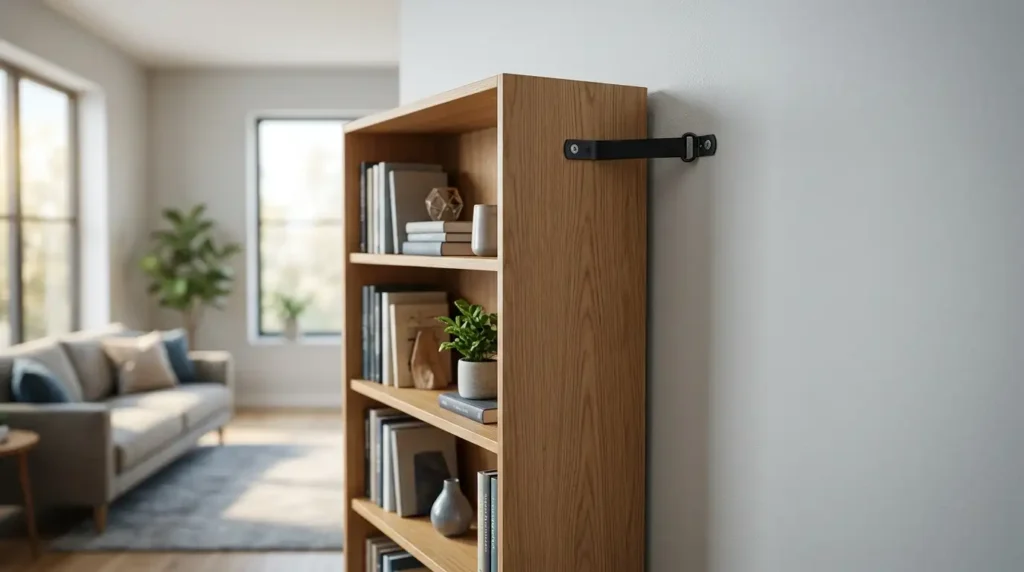
CPSC advises you to anchor TVs and furniture, such as bookcases and dressers, to the wall. Keep TV and cable cords out of reach. Adults should still supervise kids, even with anchoring. You can learn the steps at Anchor It!.
Home improvement stores, including The Home Depot, sell anchor kits. Read our guide on how to anchor furniture to the wall before you start.
Protect Furniture From Everyday Wear
Small habits keep furniture looking new.
- Use cleaners the maker approves.
- Keep hot items off wood and veneer.
- Wipe spills fast.
- Flip and rotate cushions where possible.
- Follow the care tag.
Use coasters and felt pads. Keep sofas out of strong sun, which can fade fabric. These simple steps extend the life of every piece.
Inspect Furniture Regularly
Do a quick check every few months. Look for loose screws and wobbly legs. Test drawer slides and hinges. Check joints for cracks.
Tighten hardware as the maker directs. Fix small problems early. A loose leg is easy to repair. A broken one may not be.
Frequently Asked Questions About Choosing Furniture for a New Home
Here are quick answers to the questions I hear most.
What Furniture Should You Buy First for a New Home?
Start with a bed and a mattress. You need good sleep first. Next, add basic seating, a table to eat at, and simple storage. These pieces support daily life. Decor can wait.
How Much Should You Budget for Furnishing a New Home?
It depends on home size, quality level, and what you already own. A studio costs far less than a four-bedroom house. Make a room-by-room list and add delivery and assembly fees. Our furniture budget planner can help you set a realistic target.
What Is the Best Furniture Material for Everyday Use?
There is no single best. Solid wood is durable and repairable. Plywood is strong. Metal is easy to clean. Performance fabrics resist stains. Pick based on use and upkeep. For busy homes, I lean toward solid wood tables and performance fabric sofas.
Should You Buy All Your Furniture at Once?
I advise against it. Buy essentials first. Then live in the space for a few weeks. You will see what you truly need. Buying in stages also spreads out costs and prevents impulse buys.
How Do You Choose Furniture for a Small Home?
Pick smaller, multi-use pieces. Think compact sofas, storage ottomans, and slim tables. Use wall space for shelves. Keep colors light. Our list of space-saving furniture for small homes has more ideas.
Is It Better to Buy Furniture Online or In-Store?
Each has strengths. Online offers more choice and easy price checks. Stores let you sit, touch, and inspect. A mix works well. Test in a store, then compare prices online. Always check delivery and return terms.
How Do You Make Different Furniture Styles Match?
Use repeat colors, similar wood tones, and balanced scale. Pick one main style and add a few pieces from others. Texture helps too. A rug or pillows can link mismatched pieces.
Which Tools Help With Planning Furniture for a New Home?
Use a tape measure, a laser distance meter, a floor plan app, an AR room viewer, and a budget spreadsheet. Together they cover size, layout, and cost. If you want help finding the right app, check our room layout planner tools guide. If you also need a professional, the American Society of Interior Designers (ASID) lists designers by location.
Conclusion: Make Your New Home Comfortable With the Right Furniture
Good furniture choices start with a plan. Measure first. Set a budget. Check materials. Match each piece to how you live. Furnish one room at a time instead of rushing. Let comfort, function, strength, and style work together. Take your time, and trust your tape measure. Soon your empty rooms will feel like home.
Final Recommendation
If you remember one thing about how to choose furniture for a new home, make it this. Measure twice, then shop once. I have seen sofas stuck in stairwells and tables that blocked doors. Both were easy to prevent. Start with your daily routine, then your numbers, then your style. Buy the pieces you use most first, and test each one with your hands. Use tools for planning, but let a real tape measure have the final say. Go slowly, and enjoy the process.

Shakitul Alam is a seasoned interior design consultant and furniture expert with over 15 years of hands-on experience in home decor, space optimization, and furniture craftsmanship. He holds a Bachelor’s degree in Interior Architecture & Design from the University of California, Berkeley (UC Berkeley), where he developed a deep passion for functional aesthetics and modern home living.
Throughout his 15+ year career, Shakitul has worked closely with leading interior design firms, furniture manufacturers, and residential clients across the United States. His expertise spans ergonomic furniture selection, material durability analysis, budget-friendly living room setups, and sustainable interior design trends.
At Looky Furniture, Shakitul leads the editorial and product evaluation team. He personally tests, researches, and reviews home furnishings to provide readers with accurate, practical, and unbiased buying guides. His mission is to help homeowners and renters make informed decisions, transforming everyday spaces into stylish, comfortable, and functional homes.
When he isn’t evaluating the latest furniture designs, Shakitul enjoys studying eco-friendly woodworking techniques and exploring minimalist architectural trends.